
Texas Cool
Thoughts from a road trip

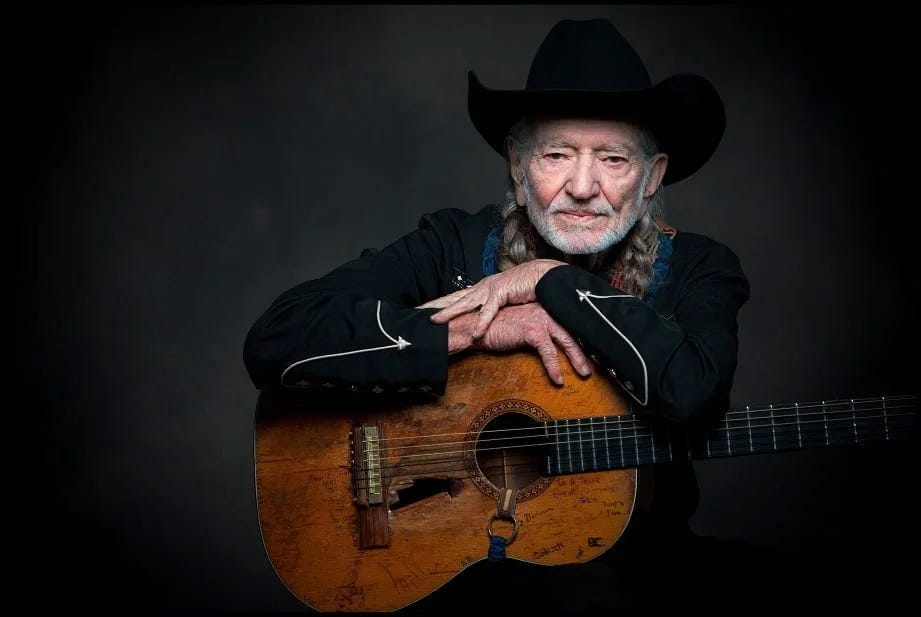
When I curated the photography exhibit American Cool in 2014, I hoped it would spin off specific regional exhibits —NY Cool, LA Cool, Miami Cool, UK Cool — since each of these places boasts its own unique brand. That never happened, but having just returned from an Austin road trip with a former student from Amarillo, we kicked around Texas Cool.
Thanks for reading! Subscribe for free to receive new posts and support my work.
I spent the ‘90s in Austin, getting my Ph.D. in American Studies at UT, and spent a good deal of time exploring the city and state, physically and culturally. Yet even as Austin is the blue musical heartbeat of Texas and the state capital, the mere mention of Texas now triggers political cliches. As a novelist friend wrote recently on FB, “I’ve always written off Texas as being irredeemably conservative, the state of Bush and Company.” Politically, yes; culturally, no.
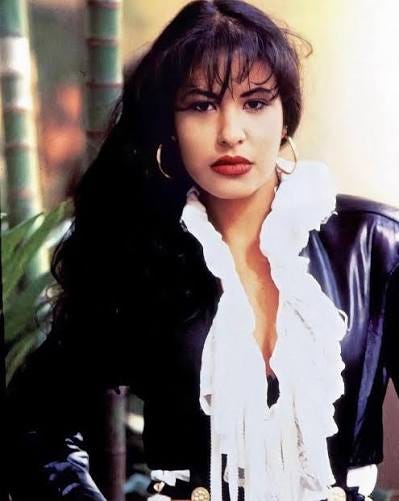
Consider its diversity: Texas contains four of the nation’s top ten most populous cities: Houston, Dallas, Fort Worth, and San Antonio (the nation’s largest majority Hispanic city). Beyoncé is from Houston, Janis Joplin’s from Port Arthur, Selena grew up in Corpus Christi, Willie Nelson is from the small Hill Country town of Abbott, Lightnin’ Hopkins from the small farming town of Centerville.
As Zora Neale Hurston once wrote: You got to go there / to know there.
Can some Texas troubadour please put that idea in a song? I’m looking at you, Steve Earle, Miranda Lambert, Kacey Musgraves, Lyle Lovett, Hayes Carll, Robert Earl Keen. Stick that batch of Texan progressives in your political hat and smoke it! (Worth the mixed metaphor.)
Texas is highly state-identified, mostly due to the fact that it was a country beforehand: The Republic of Texas, 1836-1845. In fact, the official tourism slogan of the ‘80s and ‘90s was “Texas: It’s a Whole ‘Nother Country” — even if my favorite has always been “Don’t Mess With Texas.” Foods proliferate in the state’s unique shape: Texas-shaped tortilla chips, ice cubes, butter cookies. At the Holiday Inn breakfast in Amarillo, the waffle-maker stamped ‘em out in the shape of Texas.
I will not here get into the history of the state’s origins as regards slavery, its vicious anti-Mexican racism via the Texas Rangers, or the vast land-grab known as the Mexican-American war. Because in spite of all that, proud Texans — and cool ones — come in all shapes and sizes, all genders and ethnicities.
So what is Texas cool?
Texas Cool is the opposite of both NYC cool — its style, bluntness and street-smarts, its quick, sharp, nervous energy —and LA’s laid-back shades, shorts, and beachy hedonism.
The essential core of Texas cool is stillness. That stillness can be found in the formal decorum of the state’s public civic culture. Conversation unfolds in a certain laconic rhythm; children still grow up saying “Ma’am” and “Sir.” Texans don’t curse much in public, at least when sober, whereas for New Yorkers, profanity is an art form. The first time I used motherfucker in a conversation with classmates, I felt jaws drop around me. I guess I won’t be saying that around here, I thought.
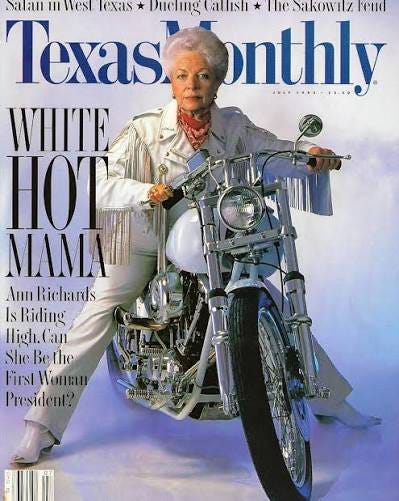
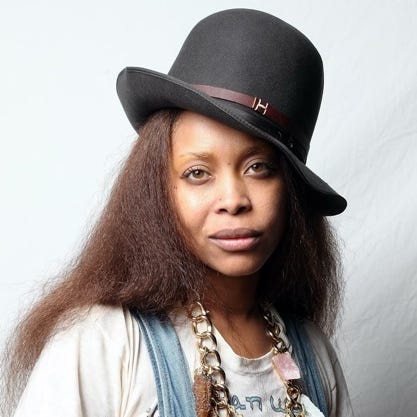
Stillness here means calmness and comfort within silence or quiet. Whether in performance, in conversation, in face-to-face exchanges — there is a core mental and physical rest available to born-and-bred Texans. Such stillness was unnerving to someone like me, a New York Jewish guy used to ethnic groups whose hand gestures and facial expressions accompany every face-to-face interaction. Willie Nelson and Erykah Badu have this stillness in their singing, Tommy Lee Jones and Sissy Spacek when acting, LBJ and Governor Ann Richards had it on the political stump. The space of silence is always available.
Case in point. When I first started teaching at UT, my students often just stared at me blankly. I realized two things: (1) I literally talked too fast, stylistically speaking, for them to catch my meaning; (2) I expected them to interrupt me with questions or comments — only they were too respectful for that. What’d I do? I slowed my (verbal) roll, then forced myself to come to a full stop after making a point; I had to be comfortable with letting the silence linger. Once I learned to do that, after five-to-seven seconds, discussion would begin.
How did it come to be this way? It comes from a long history of self-sufficiency and a once-sparse landscape.
Texas identity now holds onto much of what was once associated with the West and the genre of the Western — it is an inheritance of rural cool, even when found in cities.
In Robert Warshow’s classic essay, “The Westerner,” he analyzed both the movie genre and its protagonists. The Westerner was “a figure of repose” admired for his restraint and for projecting “the appearance of unshakeable [self-] control.” Here, repose = stillness. And to act with restraint as a person — or as a singer, actor, or musician — is an essential element of classic cool.
Before the antiheroes of film noir, the cinematic genre of ethics in action was the Western, something I learned from philosopher Robert B. Pippin’s study, Hollywood Westerns and American Myth. The main conflict at the heart of the best Westerns depends upon the protagonist — whether outlaw or sheriff — acting on his private ethical code. The so-called Westerner is analogous to the film noir figure I’ve called “the ethical rebel loner.”
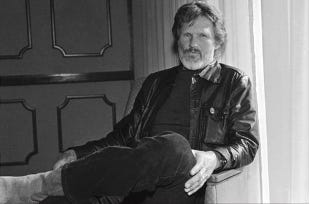
Cool matters most when embodied physically, mentally, and spiritually in admirable human beings — whether artists or people in your everyday life. A cool person projects a subdued, charismatic self-confidence. Warshow left us a universal definition of cool, allowing for turning his male pronouns into universals: “his value must express itself entirely in his own being – in his presence.” Translated: A person’s cool expresses itself entirely in their own physical being, that is to say, you understand it in their presence.
Just adding to Stan’s point, thinking of Bonnie n Clyde; also Patricia Neal’s character in “Hud” and Robert Ryan’s character in “The Wild Bunch.” Waylon Jennings and Buddy Holly and the way sunglasses work for ZZ Topp. Also, as Stan reminded me, the first human utterance in outer space were these super-chill words from Neil Armstrong: “Houston? Tranquility Base here. The Eagle has landed”
It's own vibe. Delbert McClinton spent time in"Stop-6" hub of Black community in Ft.Worth.Who also gave us Ornette Coleman. Percy Sutton first Black Manhattan Borough president is from San Antonio. Hubert Laws/Ronnie Laws/Eloise Laws from Houston..in addition to Jazz Crusade's.Joe Sample,Stix,Henderson,Felder. Robert Johnson's last recordings took place in San Antonio. The PENULTIMATE TEXAN...LBJ....and criminally underrated John Henry Faulk & Henry B. Gonzales...looking forward to more travels with Joel